US tax for Americans in Bangladesh
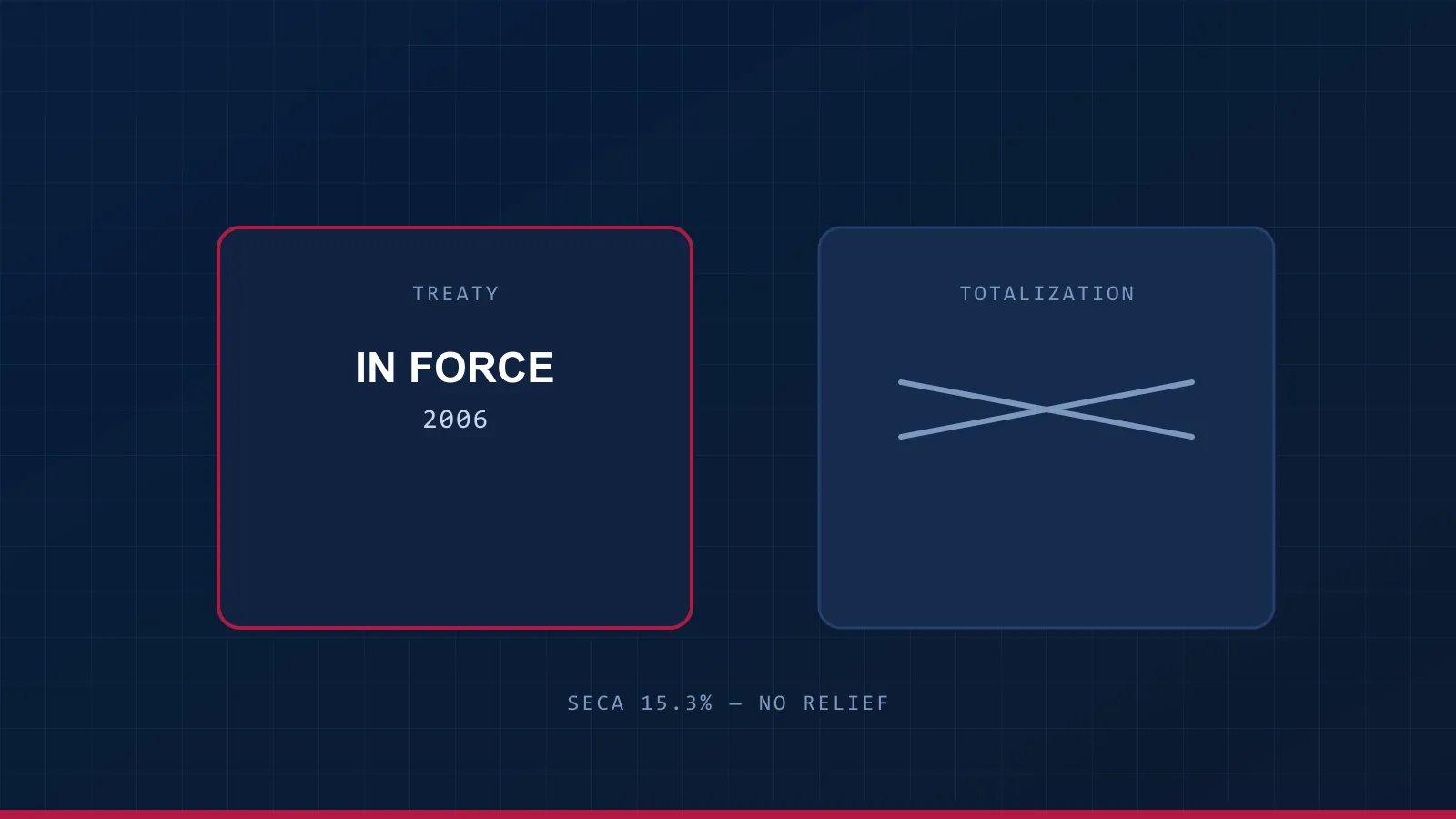
A US–Bangladesh income tax treaty has been in force since 2006, which handles double income tax cleanly. What it does not handle is self-employment tax — and a large share of Americans in Bangladesh are paid in a way that brings that tax into play.

The treaty helps with income tax — not everything
Citizenship, not residence, decides who files a US return, so moving to Dhaka does not pause it. The US–Bangladesh income tax treaty, signed in 2004 and in force since 2006, means Bangladeshi income tax actually paid is creditable against US tax on Form 1116 — double income tax is a solved problem here.
What the treaty does not reach is social security. There is no US–Bangladesh totalization agreement, so it settles nothing about self-employment tax — and that is where most of the cost in this group actually sits.
NGO and development consultants: the self-employment trap
A large share of Americans working in Bangladesh are paid as consultants by NGOs, development agencies or multilateral programmes rather than as employees. That arrangement is frequently self-employment for US purposes even where the day-to-day work looks exactly like a job — regular hours, one client, a desk at the same office every day. Self-employment status brings Schedule SE onto the return, and with no totalization agreement to relieve it, the 15.3% self-employment tax applies to net earnings in full.
Employment by certain international organisations can change this analysis — some carry their own coverage agreements, and the answer turns on the organisation rather than on the country. That is a detail worth bringing to a call rather than assuming either way.
The foreign housing exclusion usually outperforms expectations
Expatriate-standard housing in Dhaka is expensive relative to local income levels, which makes the foreign housing exclusion worth more here than clients typically assume. It has to be computed from a lease or an employer's housing statement rather than estimated, and on this kind of housing cost it is routinely the largest single item on the return.
Exclusion or credit — a genuinely open question
Bangladeshi income tax rates run progressive to 25%, below the top US rate, so claiming the foreign tax credit alone frequently leaves US tax owing above what the Foreign Earned Income Exclusion would have covered. Which election is better is not obvious in either direction here — it has to be run on the actual salary, housing cost and filing status rather than assumed from how the comparison usually goes in a higher-tax or a no-tax country.
A worked example, tax year 2025
An NGO consultant in Dhaka, single, qualifying under the physical presence test, paid as an independent contractor with a housing allowance written into the contract.
Scroll the table sideways
IRC §911, §1401 and §1402; IRS Publication 54; IRS Publication 901; US–Bangladesh income tax treaty (2004, in force 2006); Social Security Administration totalization agreement list; IRS Streamlined Filing Compliance Procedures; Rev. Proc. 2025-32. Checked 20 September 2026.
Questions Americans in Bangladesh ask
I consult for an NGO in Dhaka. Am I self-employed for US tax?
Often yes, and that is the expensive question. Consultancy arrangements with NGOs, development agencies and multilaterals are frequently self-employment for US purposes, which brings Schedule SE and 15.3% self-employment tax with no totalization relief available.
Does the treaty stop me being taxed twice?
It addresses double income tax, and Bangladeshi income tax actually paid is creditable against your US liability on Form 1116. It does not reach social security, which is why self-employment tax still applies in full.
Can I claim the housing exclusion on my Dhaka apartment?
Yes, where the costs are qualified housing expenses and you meet the foreign residence or physical presence test. On expatriate-standard Dhaka housing it is usually the largest single item on the return, computed from the lease or the employer's housing statement.
Do I owe US tax if Bangladesh already taxed my income?
Sometimes nothing further is owed, but the filing obligation stands either way. The Foreign Earned Income Exclusion or the foreign tax credit usually removes most or all of the US liability — which one wins depends on the actual salary and housing numbers, not on a rule of thumb.
I have not filed for several years while in Bangladesh. What now?
If the failure was non-willful — which describes most people in this position — the Streamlined Foreign Offshore Procedures waive the failure-to-file, failure-to-pay and FBAR penalties: three years of returns, six years of FBARs, and Form 14653.
Consulting for an NGO in Dhaka?
Bring the contract. Twenty minutes settles whether it is self-employment, and what the housing exclusion is worth.