US tax for Americans in Brazil
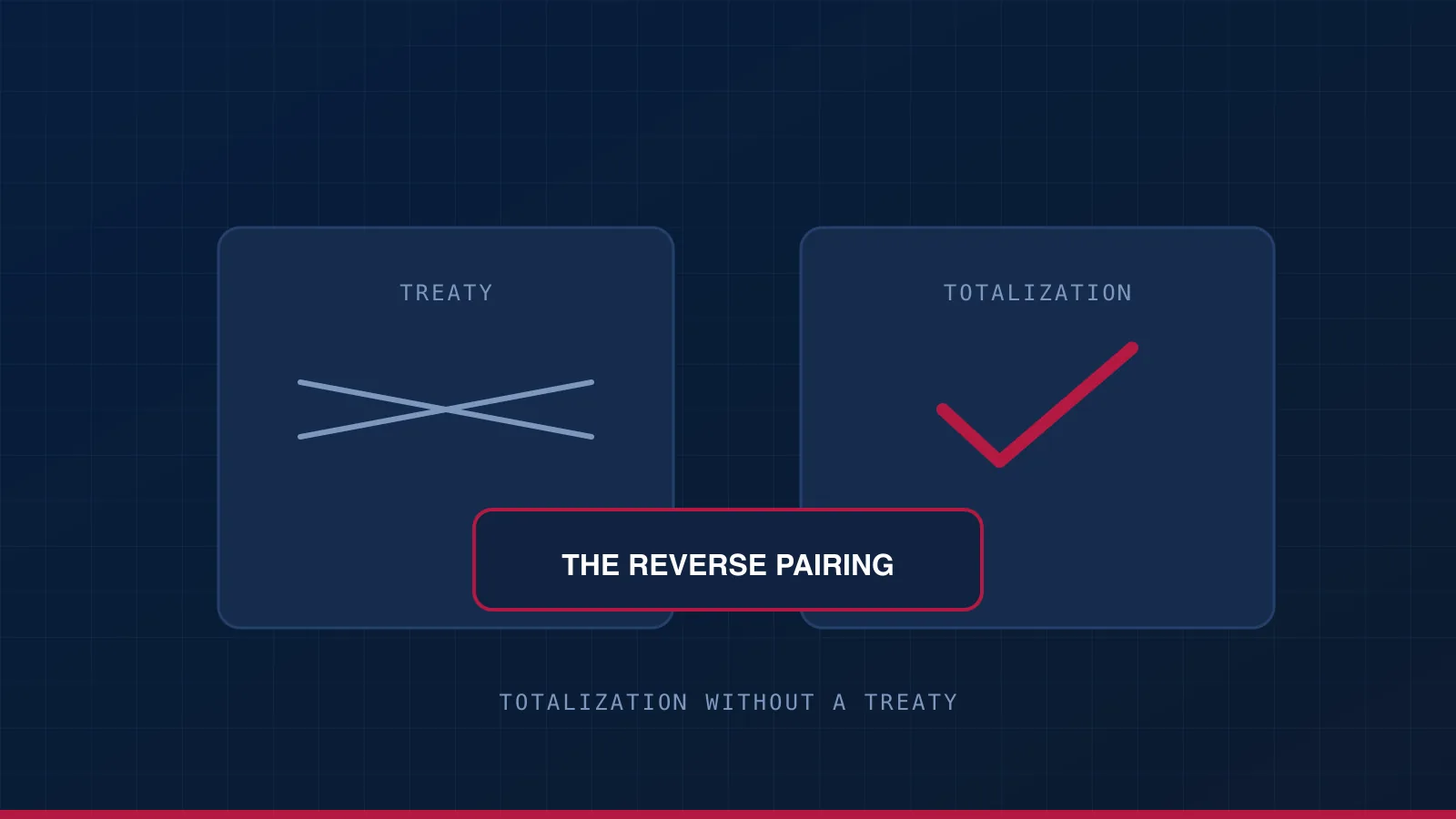
Brazil is the inversion of the usual arrangement: there is a US–Brazil totalization agreement and no income tax treaty. Self-employment tax is therefore relievable with a certificate of coverage — the opposite of most of Asia and Latin America — while the income tax side has no treaty machinery behind it at all.

Get the inversion straight
Almost every country on this site has an income tax treaty and no totalization agreement. Brazil has a totalization agreement and no income tax treaty, which reverses which problem you have.
The good news: self-employment tax is relievable where the agreement assigns your coverage to Brazil, on a certificate of coverage. For a consultant that is the largest line on most returns elsewhere and it is addressable here.
The income tax side has no treaty behind it
Brazilian income tax is still creditable on Form 1116 — the credit is statutory and does not need a treaty. What is missing is everything a treaty would add: a residency tie-breaker, a pension article, reduced withholding, and a mutual agreement procedure when the two systems disagree.
Brazil also applies reciprocity of treatment to US tax as a matter of its own administrative position rather than under a treaty, which can allow relief on the Brazilian side. That is a Brazilian question for a Brazilian adviser; the US side is the ordinary credit.
Residency can start on arrival, not after a count
Brazil taxes residents on worldwide income, and residency can begin on arrival with a permanent visa rather than after a day-count. That timing catches people who assume a first partial year sits outside the Brazilian system — and what Brazil taxes decides what there is to credit on the US return.
Brazilian funds and retirement plans
Brazilian investment funds and PGBL or VGBL retirement plans raise the same reporting and PFIC questions as their Canadian and Indian equivalents. Local tax favour does not carry across, and neither plan is automatically a US-recognised retirement arrangement.
A worked example, tax year 2025
A single American consulting from São Paulo, $95,000 of net self-employment earnings, with Brazilian income tax of $22,000 and a certificate of coverage in hand. Brazilian figures are illustrative; the US figures are computed.
Scroll the table sideways
IRC §901, §904, §911, §1401 and §1402; US–Brazil totalization agreement; Social Security Administration totalization agreement list; IRS Publication 54; IRS Publication 514; IRS Form 8621 and Form 8938 instructions; Brazilian residence rules and the reciprocity of treatment position; Rev. Proc. 2025-32; 31 CFR 1010.350. US figures are tax year 2025. Checked 22 September 2026.
Questions Americans in Brazil ask
Is there a US–Brazil tax treaty?
No. There is a totalization agreement covering social security, but no income tax treaty — the reverse of the usual arrangement.
Can I still credit Brazilian tax without a treaty?
Yes. The foreign tax credit is statutory rather than treaty-based, so Brazilian income tax actually paid is creditable on Form 1116. What is missing is the tie-breakers, pension articles and withholding relief a treaty would add.
Do I pay US self-employment tax in Brazil?
Usually not, and this is where Brazil is unusual. The totalization agreement can assign your coverage to Brazil, which removes the 15.3% US charge — on a certificate of coverage rather than an assumption.
When do I become a Brazilian tax resident?
It can be on arrival with a permanent visa, rather than after a day-count. Brazil then taxes worldwide income, which catches people who assume their first partial year is outside the system.
I have not filed for several years while in Brazil. What now?
If the failure was non-willful — which describes most people in this position — the Streamlined Foreign Offshore Procedures waive the failure-to-file, failure-to-pay and FBAR penalties: three years of returns, six years of FBARs, and Form 14653.
Filing from Brazil?
Twenty minutes settles the certificate of coverage and when your Brazilian residency actually started.