US tax for Americans in Indonesia
There is a US–Indonesia income tax treaty, so Indonesian income tax is creditable and double income tax is addressable. There is no totalization agreement, so consultants and contractors — a large share of the American population here — pay 15.3% US self-employment tax on net earnings whatever the treaty does.
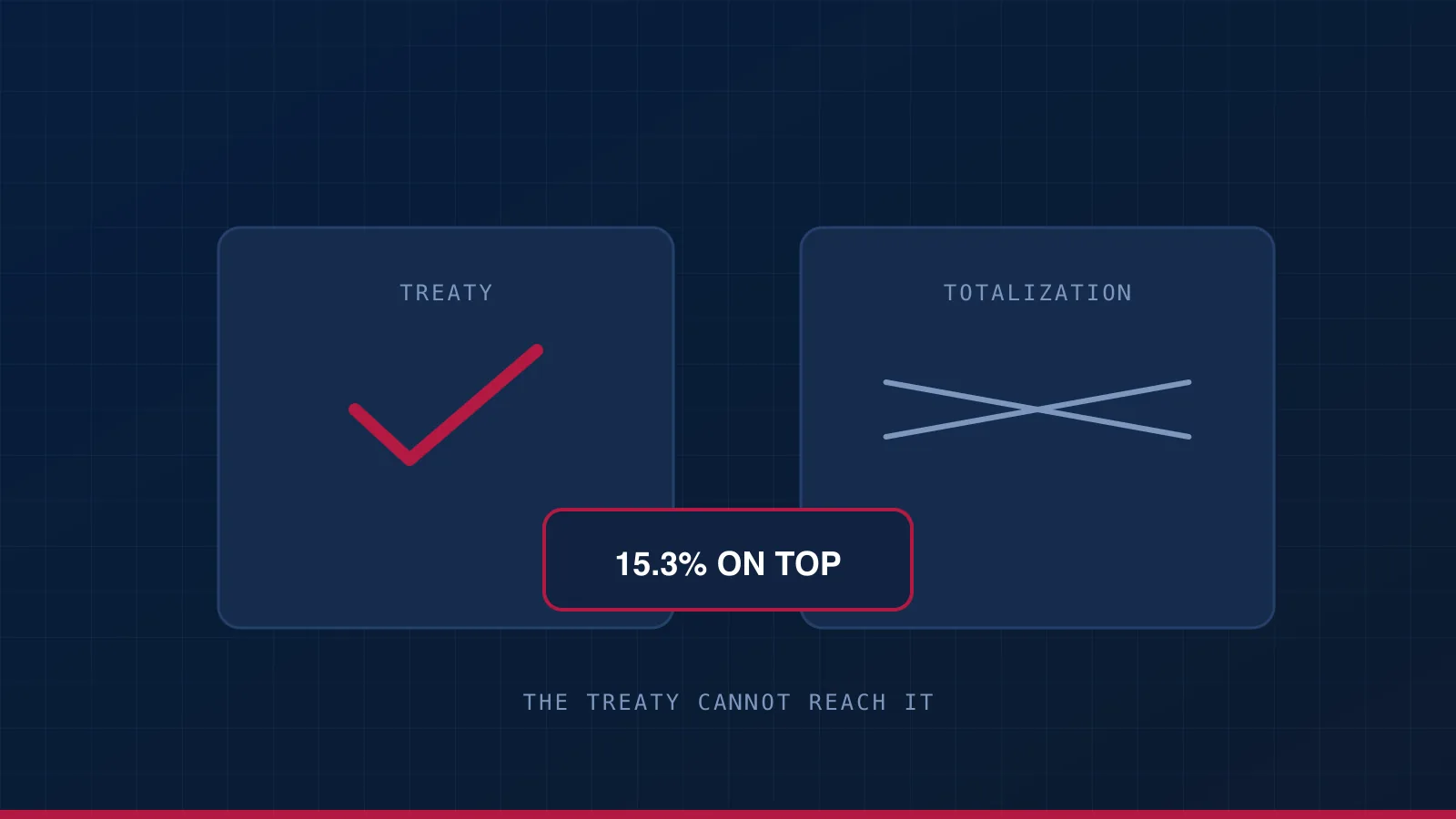

A treaty that cannot reach the real charge
The treaty relieves double income tax and makes Indonesian tax creditable. It does nothing about social security, because that is what a totalization agreement does and there is none.
For the consultants, contractors and remote business owners who make up much of the American population in Jakarta and Bali, that gap is the whole of the US liability in a typical year: 15.3% on net self-employment earnings, whatever the exclusion or the credit does to income tax.
Residency can start earlier than you expect
Indonesian tax residence begins at 183 days in any twelve months, or on establishing an intention to reside — which can be earlier than a day-count suggests. From that point Indonesia taxes worldwide income, and the treaty's residency article decides the position where both countries claim you.
Final withholding is creditable, but substantiated differently
Indonesia operates a final-withholding regime on several income types. Tax withheld at a final rate is generally still creditable on Form 1116, but the evidence for it looks different from a filed-return credit — there may be no assessment to point at, only withholding certificates.
Keep them. A credit you cannot substantiate is a credit you may not keep.
BPJS contributions are not creditable
BPJS health and pension contributions are not income taxes and do not belong on Form 1116. With no totalization agreement, they also buy no relief from the US self-employment charge — a real cost with no US offset on either side.
A visa is not a tax status
A second-home or investor visa is immigration status. It does not alter a US filing obligation, and it can accelerate Indonesian residency rather than delay it — which is the opposite of what people generally assume they are buying.
A worked example, tax year 2025
A single American running a consultancy from Bali, $90,000 of net self-employment earnings, with Indonesian tax of $18,000 for the year.
Scroll the table sideways
IRC §901, §904, §911, §1401 and §1402; US–Indonesia income tax treaty; Social Security Administration totalization agreement list; IRS Publication 54; IRS Publication 514; Indonesian tax residence rules, final withholding regimes and BPJS contributions; Rev. Proc. 2025-32; 31 CFR 1010.350. US figures are tax year 2025. Checked 22 September 2026.
Questions Americans in Indonesia ask
When do I become an Indonesian tax resident?
At 183 days in any twelve months, or on establishing an intention to reside — which can be earlier than a day-count suggests. Indonesia then taxes worldwide income.
Do I pay US self-employment tax in Indonesia?
Yes, in full. There is no totalization agreement, so 15.3% SECA applies to net self-employment earnings regardless of Indonesian tax paid or the credit claimed for it.
Are BPJS contributions creditable on my US return?
No. They are not income taxes, so they do not go on Form 1116 — and with no totalization agreement they relieve nothing on the self-employment side either.
Is tax withheld at a final rate still creditable?
Generally yes, but the substantiation is different: there may be no assessment to point at, only withholding certificates. Keep them, because a credit you cannot evidence is a credit you may not keep.
I have not filed for several years while in Indonesia. What now?
If the failure was non-willful — which describes most people in this position — the Streamlined Foreign Offshore Procedures waive the failure-to-file, failure-to-pay and FBAR penalties: three years of returns, six years of FBARs, and Form 14653.
Working from Bali or Jakarta?
Twenty minutes settles whether you are self-employed for US purposes, and when Indonesian residency started.