US tax for Americans in Mexico
There is a US–Mexico income tax treaty, so Mexican income tax is creditable and double income tax is addressable. The totalization agreement signed in 2004 never entered into force, so it provides nothing at all: 15.3% US self-employment tax applies in full. For the large retired American population here, the questions are different again.
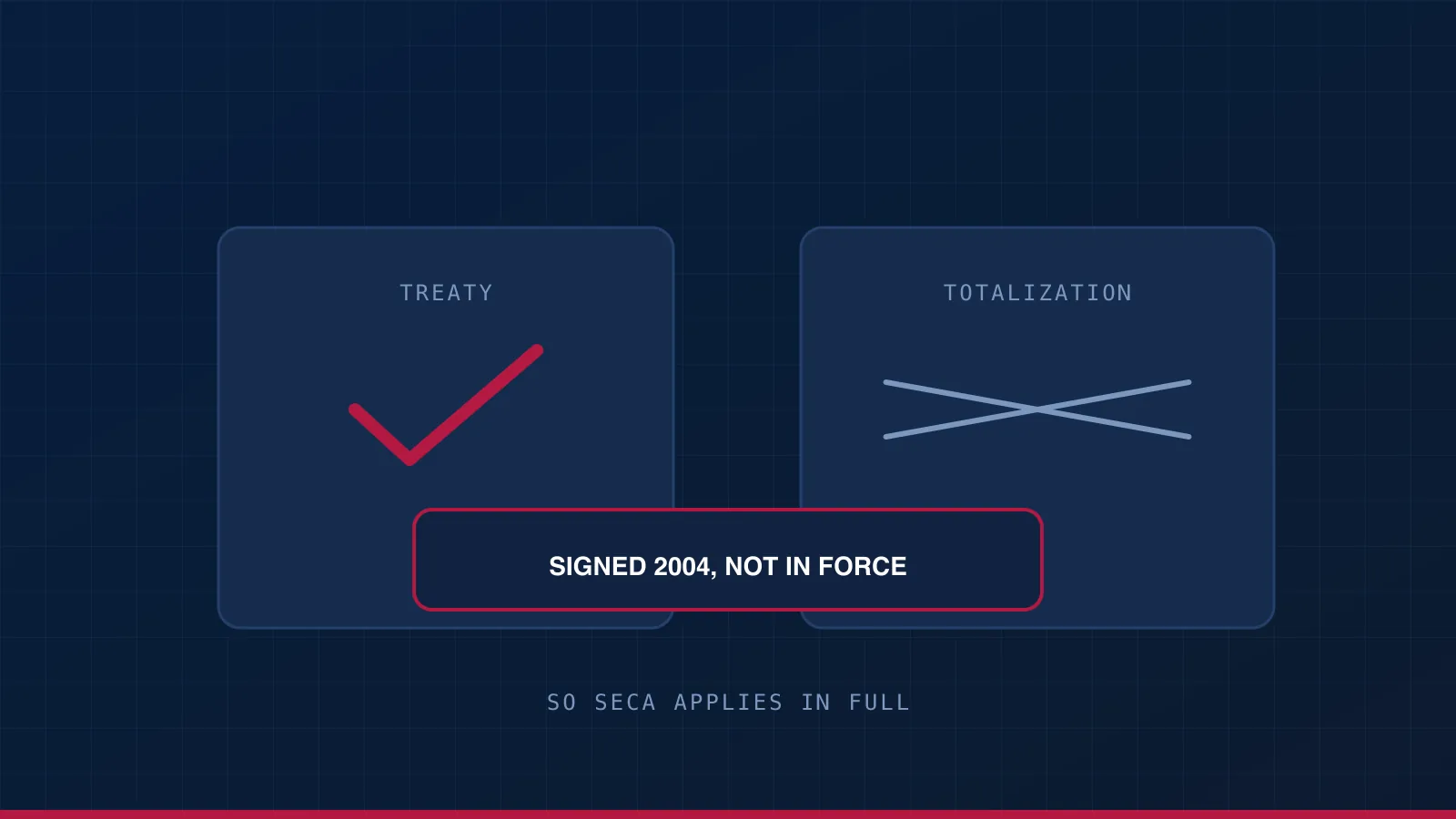

The totalization agreement that never arrived
An agreement was signed in 2004 and has never been brought into force. It provides nothing — no assignment of coverage, no certificate, no relief. Anyone told otherwise, including by a Mexican adviser working from the signature, is working from a document that was never completed.
The practical consequence: a self-employed American in Mexico pays 15.3% US self-employment tax on net earnings in addition to Mexican tax, with no mechanism to avoid it.
Mexican residency is not only a day-count
Mexico treats you as resident where your centre of vital interests sits, which can turn on where your home, family and principal economic interests are rather than purely on days present. Mexico then taxes residents on worldwide income.
Getting that wrong changes both returns, not just the Mexican one — because what Mexico taxes determines what there is to credit on the US side. It is worth settling deliberately rather than assuming a six-month rule applies.
Retirees: the questions are different
The retired American population in Mexico is larger than anywhere else covered here, and pensions, IRA distributions and US Social Security are US-source income that Mexico may also tax as a resident. The treaty has articles dealing with pensions and with social security payments, and which applies depends on the type of income rather than on a general rule.
That is a treaty-reading exercise with your own facts, not a question with a single published answer. It is also the difference between a comfortable retirement budget and an unpleasant surprise.
IMSS is not a creditable tax
IMSS contributions are social security rather than income tax, so they do not go on Form 1116. The ISR withheld from a Mexican salary is the creditable item; IMSS is a cost with no US offset, and with no totalization agreement in force it buys no relief either.
Afore accounts and Mexican funds
An Afore retirement account and Mexican investment funds raise reporting and PFIC questions in the same way Canadian funds do. Neither carries its Mexican treatment across, and both are worth putting on the table before the return is prepared rather than after.
A worked example, tax year 2025
A single American employed in Mexico City on $110,000, with Mexican ISR of $30,000 for the year. Mexican figures are illustrative; the US figures are computed.
Scroll the table sideways
IRC §901, §904, §911, §1401 and §1402; US–Mexico income tax treaty and protocols, including the articles on pensions and social security payments; the US–Mexico totalization agreement signed in 2004 and not in force; Social Security Administration totalization agreement list; IRS Publication 54; IRS Publication 514; IRS Form 8621 and Form 8938 instructions; Mexican residence rules and IMSS contributions; Rev. Proc. 2025-32; 31 CFR 1010.350. US figures are tax year 2025. Checked 22 September 2026.
Questions Americans in Mexico ask
Is there a US–Mexico totalization agreement?
No — not one in force. An agreement was signed in 2004 and never brought into effect, so it provides nothing. Self-employment tax applies in full.
I am retired in Mexico. Is my US Social Security taxed twice?
Not necessarily, but it needs the treaty read against your own facts. The treaty contains articles on pensions and on social security payments, and which applies depends on the type of income rather than on a general rule.
Are my IMSS contributions creditable on my US return?
No. They are social security rather than income tax. The ISR withheld from your salary is the creditable item; IMSS is a cost with no US offset.
Does living in Mexico part of the year make me a Mexican tax resident?
Possibly, and not only on a day-count. Mexico looks at where your centre of vital interests sits — home, family and principal economic interests — and taxes residents on worldwide income.
I have not filed for several years while in Mexico. What now?
If the failure was non-willful — which describes most people in this position — the Streamlined Foreign Offshore Procedures waive the failure-to-file, failure-to-pay and FBAR penalties: three years of returns, six years of FBARs, and Form 14653.
Living or retired in Mexico?
Twenty minutes settles your Mexican residency position and what the treaty does with your pension income.