US tax for Americans in New Zealand
There is a US–New Zealand income tax treaty, so New Zealand income tax is creditable and double income tax is addressable. There is no totalization agreement, which means 15.3% US self-employment tax applies with no relief — the single largest item on most contractor returns filed from here.
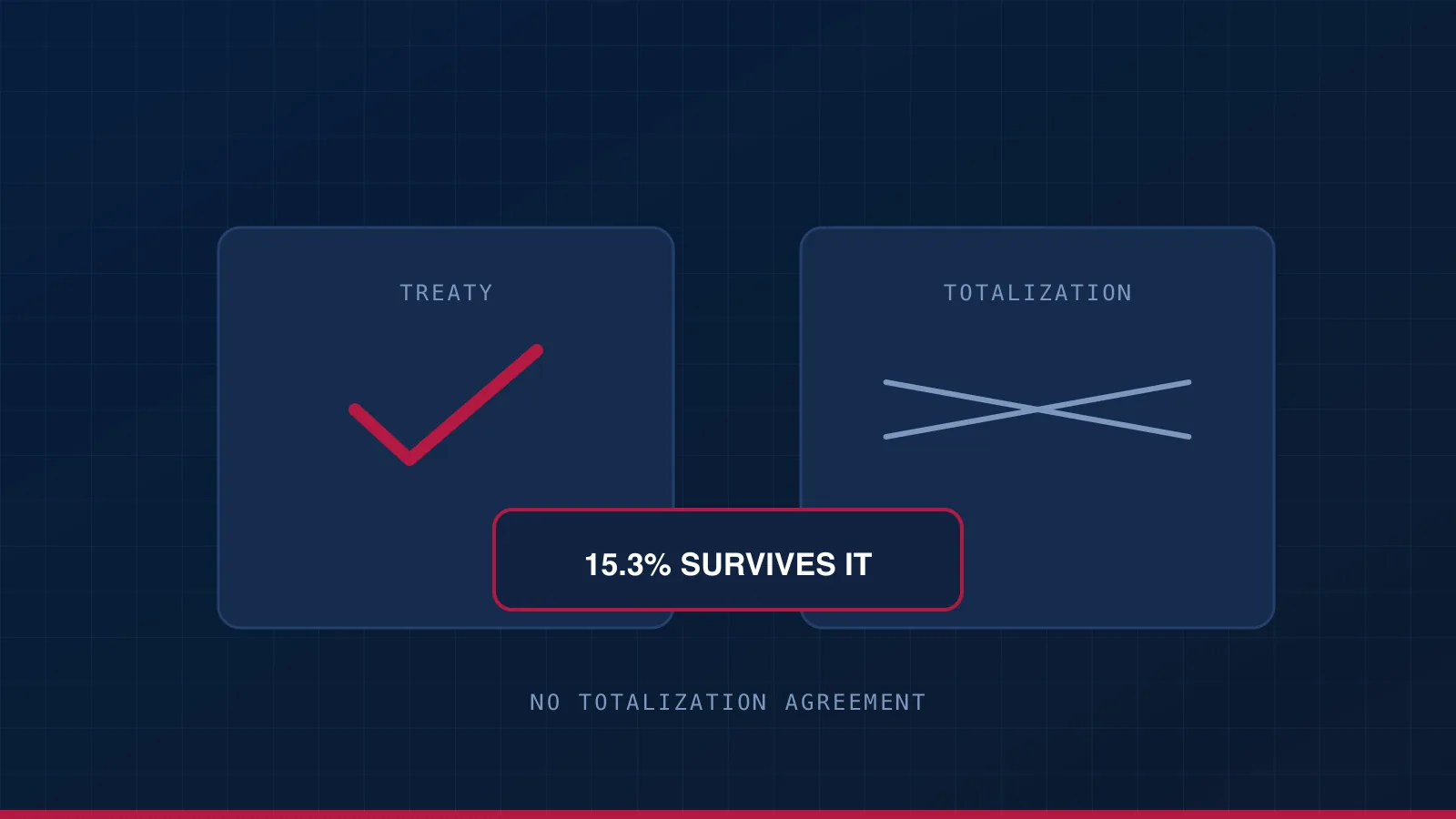

One instrument, not two
The treaty relieves double income tax and makes New Zealand tax creditable. A totalization agreement would relieve double social security, and there is none between the United States and New Zealand.
An employee on a New Zealand payroll is usually comfortable: a foreign salary is not subject to US Social Security tax in the first place. A contractor is not, because 15.3% self-employment tax applies to net earnings whatever the treaty and whatever the exclusion do to income tax.
KiwiSaver does not carry its treatment across
KiwiSaver is tax-favoured locally and its US treatment does not follow automatically. The PIE funds held inside it are commonly passive foreign investment companies, so the account can generate both annual reporting and an unfavourable default calculation on disposal.
Employer contributions and the government contribution each need their own characterisation as well. None of that is visible from the New Zealand side, where the account is simply a retirement scheme.
The FIF rules and the US rules are unrelated
New Zealand's foreign investment fund rules govern how New Zealand taxes your offshore holdings. They have nothing to do with how the United States taxes them: Form 8938 and the PFIC rules apply independently, and both regimes can bite the same asset in the same year without either giving credit for the other.
ACC levies are not creditable
ACC levies fund accident compensation rather than general revenue, so they are not income taxes for US purposes and do not belong on Form 1116. With no totalization agreement, they buy no relief from the US self-employment charge either.
Two tax years that do not align
New Zealand's tax year runs 1 April to 31 March; the US year is the calendar year. New Zealand tax therefore spans two US years, and whether credits are claimed when paid or when accrued decides how that is apportioned — a choice that is effectively permanent once made.
A worked example, tax year 2025
A single American contracting from Wellington, $100,000 of net self-employment earnings, with New Zealand income tax of $28,000 for the year.
Scroll the table sideways
IRC §901, §904, §911, §1401 and §1402; US–New Zealand income tax treaty; Social Security Administration totalization agreement list; IRS Publication 54; IRS Publication 514; IRS Form 8621 and Form 8938 instructions; New Zealand's foreign investment fund rules, KiwiSaver and ACC levies; Rev. Proc. 2025-32; 31 CFR 1010.350. US figures are tax year 2025. Checked 22 September 2026.
Questions Americans in New Zealand ask
Why do I pay US self-employment tax in New Zealand?
Because there is no totalization agreement. The treaty addresses income tax only; 15.3% SECA applies to net self-employment earnings regardless of New Zealand tax paid or the credit claimed for it.
How is KiwiSaver treated on my US return?
Not the way it is treated locally. Its US characterisation does not follow automatically, and the PIE funds inside it are commonly PFICs — which brings Form 8621 and an unfavourable default calculation.
Do the FIF rules affect my US tax?
No. They govern how New Zealand taxes your offshore holdings. The US applies Form 8938 and the PFIC rules independently, and both regimes can reach the same asset in the same year.
Are ACC levies creditable?
No. They fund accident compensation rather than general revenue, so they are not income taxes for US purposes — and with no totalization agreement they relieve nothing on the self-employment side either.
I have not filed for several years while in New Zealand. What now?
If the failure was non-willful — which describes most people in this position — the Streamlined Foreign Offshore Procedures waive the failure-to-file, failure-to-pay and FBAR penalties: three years of returns, six years of FBARs, and Form 14653.
Contracting from New Zealand?
Twenty minutes settles whether your arrangement is self-employment for US purposes, and what that costs on top of New Zealand tax.