US tax for Americans in Poland
There is a US–Poland income tax treaty and a totalization agreement, both in force, so income tax and social security are each addressable. The detail worth knowing is which treaty: the operative one dates from 1974, because the replacement signed in 2013 was never ratified. Polish rates are low by European standards, which makes the credit-or-exclusion question a real comparison rather than a formality.
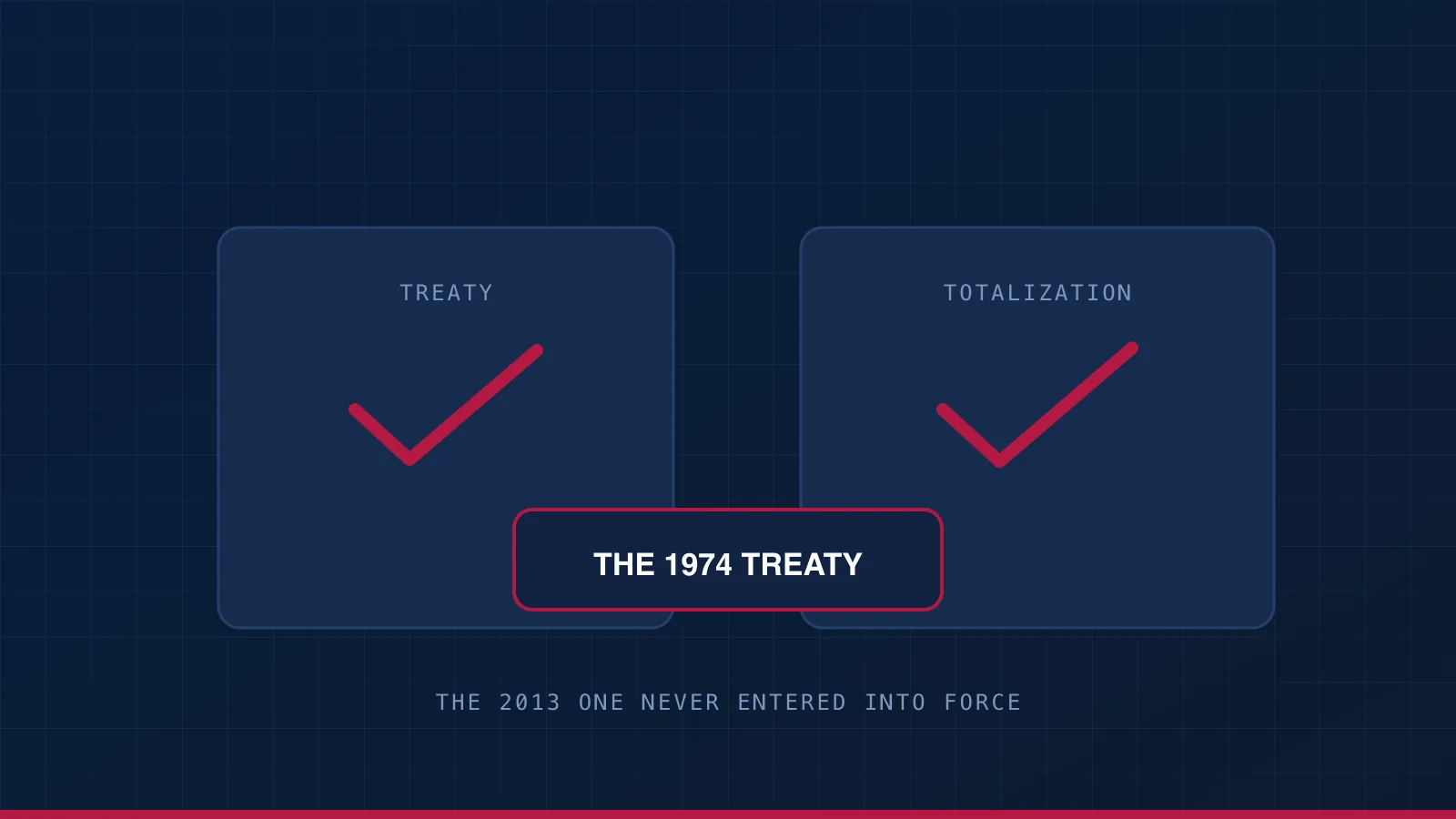

Which treaty actually applies
The 1974 treaty governs. A replacement was signed in 2013 and never entered into force, so nothing in its text can be relied on however often it is quoted — the same signed-is-not-in-force trap that catches people on Vietnam's treaty and on Mexico's totalization agreement.
The totalization agreement is a separate instrument and is in force, so social security coverage is assigned to one country rather than both, with a certificate of coverage as the evidence.
Low rates make the comparison real
Polish personal income tax runs at 12% and 32%. That is low by European standards, and it is what makes the credit-or-exclusion question a genuine calculation here rather than the formality it becomes in Germany or Sweden.
The health contribution is not an income tax and does not go on Form 1116 at all, so the creditable Polish tax is smaller than the total deducted from a Polish payslip. That gap is exactly where a credit that looked sufficient turns out not to be.
The under-26 exemption is the sharpest example
Poland exempts most employment income of taxpayers under 26 from Polish income tax. For a Polish citizen that is a straightforward saving. For an American it is not: the exemption removes the Polish tax, which removes the foreign tax credit, and the US tax on the same income does not go anywhere.
Claimed without the exclusion, a young American in Warsaw can find that Poland's generosity simply transferred revenue to the IRS. The Foreign Earned Income Exclusion is what actually protects that income — which makes the election a decision rather than a default.
IKE and IKZE accounts do not carry their treatment across
An IKE or IKZE is tax-favoured in Poland, and the US treatment does not follow. Both are reportable, and funds held inside them can be passive foreign investment companies — Form 8621, and a default calculation built to be unattractive.
A worked example, tax year 2025
A single American aged 24 employed in Warsaw on $55,000, with Polish income tax removed by the under-26 exemption.
Scroll the table sideways
IRC §901, §904 and §911; the 1974 US–Poland income tax treaty; the 2013 replacement treaty, signed and not in force; US–Poland totalization agreement; IRS Publication 54; IRS Publication 514; Polish personal income tax bands, the health contribution and the exemption for taxpayers under 26; Rev. Proc. 2025-32; 31 CFR 1010.350. US figures are tax year 2025. Checked 22 September 2026.
Questions Americans in Poland ask
Which US–Poland tax treaty applies?
The 1974 treaty. A replacement was signed in 2013 but never entered into force, so nothing in it can be relied on.
Is the exclusion or the credit better in Poland?
It is a genuine comparison rather than a default, because Polish rates of 12% and 32% are low by European standards and the health contribution is not creditable. Where a Polish exemption removes the tax entirely, the exclusion is the only route that protects the income.
Is the Polish health contribution creditable?
No. It is not an income tax, so it does not go on Form 1116. Social security is dealt with by the totalization agreement instead.
I am under 26 and pay no Polish income tax. What happens on my US return?
Without the exclusion, you pay US tax on the whole salary — there is no Polish tax to credit against it. The exemption removes Polish tax, not American tax, so the Foreign Earned Income Exclusion is what actually protects the income.
I have not filed for several years while in Poland. What now?
If the failure was non-willful — which describes most people in this position — the Streamlined Foreign Offshore Procedures waive the failure-to-file, failure-to-pay and FBAR penalties: three years of returns, six years of FBARs, and Form 14653.
Working in Poland?
Twenty minutes settles which route fits your figures — and whether a Polish exemption is quietly costing you American tax.