US tax for Americans in Saudi Arabia
There is no US–Saudi income tax treaty and no totalization agreement. Saudi Arabia has no personal income tax on employment income either, so there is nothing to credit — the exclusion and the housing exclusion carry the return, and the end-of-service benefit is the item most often mistimed.
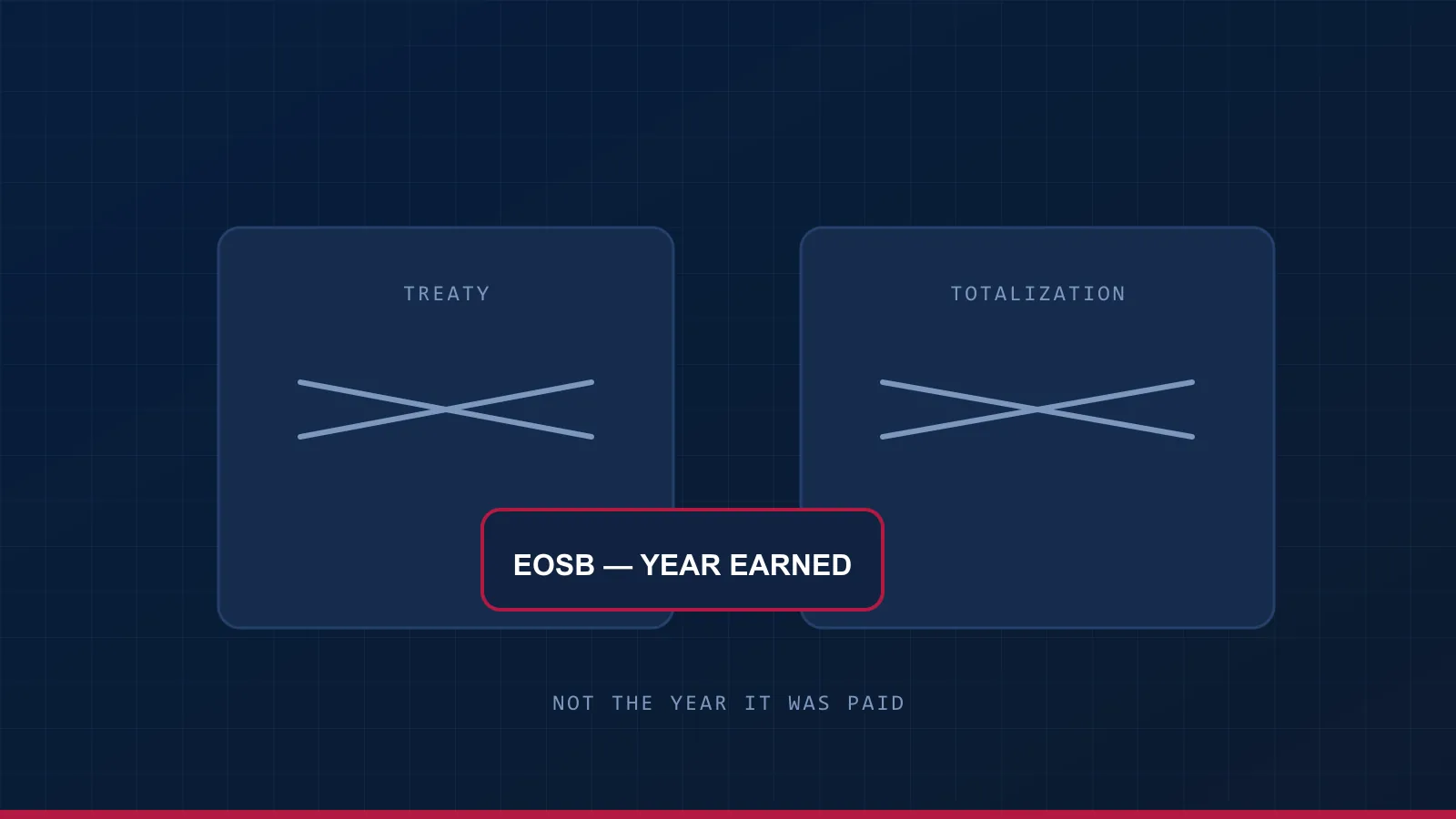

No treaty, no totalization, and nothing to credit
Citizenship, not residence, decides who files a US return, so moving to Riyadh or Jeddah does not pause it. There is no US–Saudi income tax treaty, and Saudi Arabia charges no personal income tax on employment income — so there is no foreign tax credit sitting in reserve. The Foreign Earned Income Exclusion, $130,000 for tax year 2025, and the foreign housing exclusion are what the return runs on.
There is also no totalization agreement. Social insurance withheld under GOSI is not an income tax, so it creates no credit and no relief from US self-employment tax either.
The package structure changes the arithmetic
Compensation here is usually built from a base salary plus housing and transport allowances, and sometimes employer-paid school tuition for dependents. All of it is foreign earned income for US purposes — tuition paid directly to a school is compensation just as much as cash is, even though nothing crosses into a personal account. The housing element is also a qualified housing expense, so getting the package structure right on the return matters as much as the total figure does.
The end-of-service benefit is a timing problem
The end-of-service benefit is the item most often mishandled on a Saudi return. It is compensation for services performed abroad, and which US tax year it belongs to depends on when it was earned rather than when it was paid — a distinction worth settling before resigning, not after, since it decides whether the exclusion has room to cover it that year.
"Combat zone" does not mean tax-free for civilians
Saudi Arabia is still part of the IRS's Arabian Peninsula combat zone designation, in place since Operation Desert Storm, and it has a real US military and contractor presence. That leads a lot of civilian contractors to assume their pay is untaxed — it is not. The Section 112 combat-zone income exclusion applies to members of the Armed Forces, not to civilian contractors or support staff. Civilians serving in the zone in direct support of the Armed Forces instead get an automatic Section 7508 extension on filing and payment deadlines — useful, but a deadline extension, not an exemption.
A worked example, tax year 2025
An independent engineering consultant in Riyadh, single, qualifying under the physical presence test, contracted directly with a US company with a housing allowance written into the agreement.
Scroll the table sideways
IRC §112, §911, §1401, §1402 and §7508; IRS Publication 54; IRS Publication 3; IRS Notice 2003-21; Social Security Administration totalization agreement list; IRS Streamlined Filing Compliance Procedures; Rev. Proc. 2025-32. Checked 21 September 2026.
Questions Americans in Saudi Arabia ask
Saudi Arabia has no personal income tax. Do I still owe the IRS anything?
Filing is still required either way. With no Saudi income tax to credit, the Foreign Earned Income Exclusion — $130,000 for tax year 2025 — and the foreign housing exclusion determine whether anything is actually owed.
Is my end-of-service benefit taxable in the US?
Yes, as compensation for services performed abroad. The exclusion can cover it, but only for the year it is properly attributed to — usually the year it was earned, not the year the money arrived, which is worth settling before you resign rather than after.
I pay GOSI contributions. Are they creditable?
No. Social insurance contributions are not income taxes, so there is nothing to claim on Form 1116, and with no totalization agreement they do not relieve US self-employment tax either.
My employer pays my kids' school tuition directly. Is that taxable?
Yes. Tuition paid on your behalf is additional compensation and additional foreign earned income, even though it never reaches your bank account — and it adds to what the exclusion and housing exclusion need to cover that year.
I support US forces in Saudi Arabia as a civilian contractor. Do I get combat-zone tax relief?
No exemption from tax — the Section 112 income exclusion is for military pay, not civilian contractors. If you're serving in the zone in direct support of the Armed Forces, you get an automatic extension on filing and payment deadlines under Section 7508 instead.
Wrapping up a Saudi assignment?
Twenty minutes settles when your end-of-service benefit is taxable, and what still covers it.