US tax for Americans in Thailand
Thai personal income tax is progressive to 35% and there is a US–Thailand income tax treaty, so the foreign tax credit is available and worth comparing against the exclusion. There is no totalization agreement, which is the fact that costs remote workers the most — and since 2024 the Thai side turns on what you remit into the country, not only what you earn.
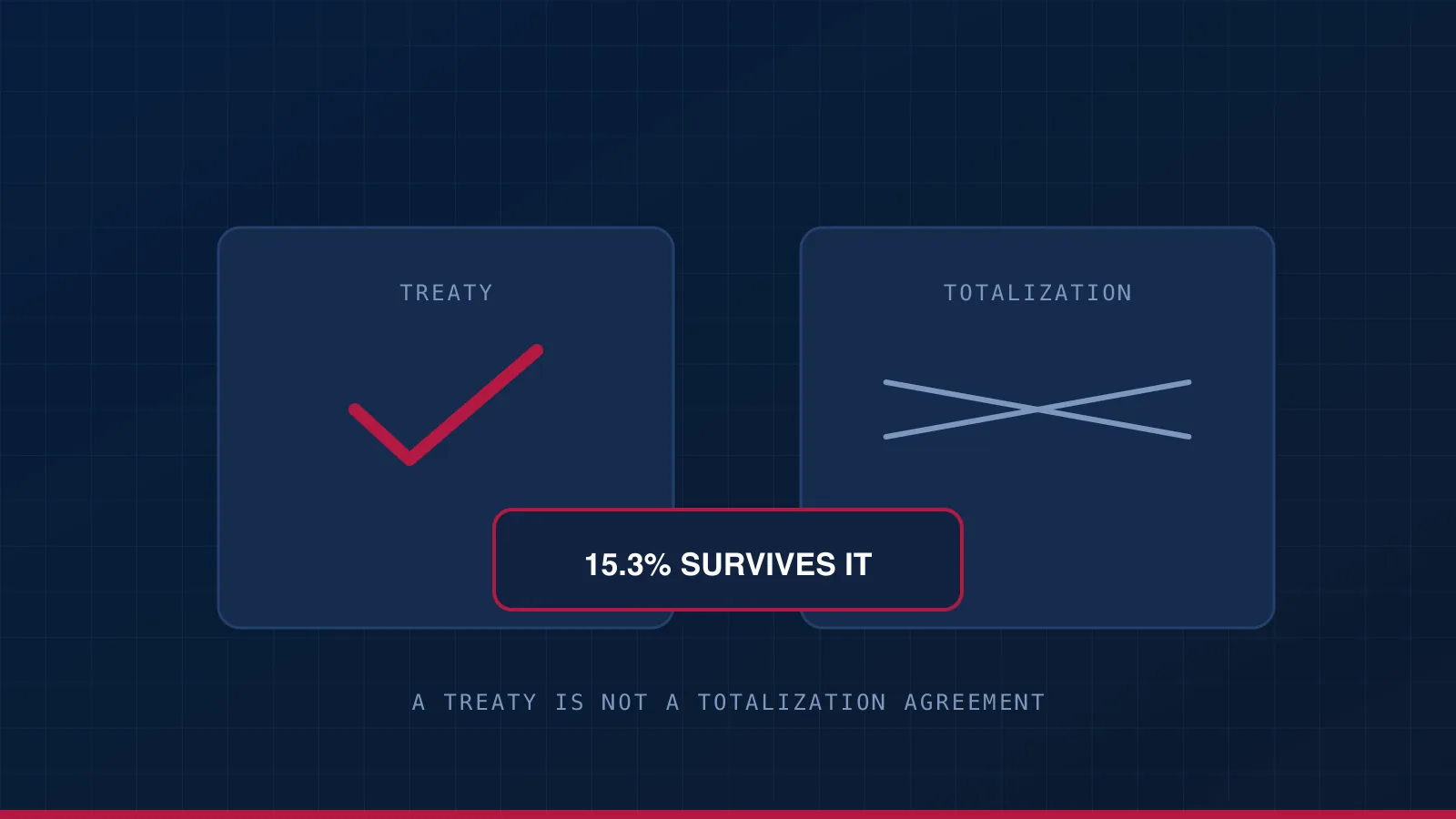

A treaty, but no totalization agreement
The US–Thailand income tax treaty relieves double income tax, mostly through the credit mechanism. What it does not do is assign you to one country: a US citizen files a US return every year whatever Thailand has taxed.
There is no totalization agreement, and that gap is where the money is. The Foreign Earned Income Exclusion, $130,000 for tax year 2025, can take the income tax to zero and leave 15.3% self-employment tax standing on every dollar of net self-employment earnings — untouched by the treaty, because a treaty is not the instrument that relieves social security.
Remote workers get the worst of it
Remote workers and consultants are the largest group filing from Thailand, and they are the group the missing totalization agreement hits hardest. Someone earning $95,000 through their own business pays no US income tax after the exclusion and still owes roughly $13,000 in self-employment tax.
An employee on a Thai payroll does not have that exposure. Which side of the line an arrangement falls on is a US characterisation question, not a Thai one, and it is worth settling before a year's worth of invoices has been issued.
The Thai remittance rule changed what Thailand taxes
Thailand taxes residents on Thai-sourced income and on foreign-sourced income brought into the country. Since 1 January 2024, foreign-sourced income remitted into Thailand by a Thai tax resident is assessable in the year it is remitted, whenever it was earned — a change from the previous position, where income remitted in a later year escaped.
A draft relief has been under consideration that would exempt foreign income remitted in the year it is earned or the year after, but it is a draft rather than law. Anyone living on remittances should take the Thai side from a local adviser and treat the position as live rather than settled.
What the change means on the US side
Nothing directly — the US taxes worldwide income regardless of where money is held or moved. What it changes is the credit. Thai tax actually paid is what supports a foreign tax credit, so a year in which little is remitted is a year with little Thai tax to credit, and the exclusion tends to carry the return instead.
It also creates timing mismatches worth expecting: income earned in one US year can be taxed by Thailand in a later one, and a credit is only useful against US tax on the same income in the same year.
Accounts people have stopped thinking about
A great many Americans in Thailand hold long-standing local accounts they no longer track. The FBAR threshold is $10,000 across all foreign accounts combined, at any point in the year — not at year end — so a dormant account with a high mid-year balance still counts, and so does an account held jointly or one you merely have signature authority over.
A worked example, tax year 2025
A single American running an online consulting business from Chiang Mai, $95,000 of net self-employment earnings, remitting enough into Thailand to pay $6,000 of Thai tax for the year.
Scroll the table sideways
IRC §901, §911, §1401 and §1402; US–Thailand income tax treaty; IRS Publication 54; IRS Publication 514; Social Security Administration totalization agreement list; Section 41 of the Thai Revenue Code and the Revenue Department instructions effective 1 January 2024 on remitted foreign-sourced income; Rev. Proc. 2025-32; 31 CFR 1010.350. US figures are tax year 2025. Checked 22 September 2026.
Questions Americans in Thailand ask
I run an online business from Thailand. What do I actually owe the US?
Income tax is usually removed by the exclusion or reduced by the credit. Self-employment tax is not: with no totalization agreement, 15.3% SECA applies to net self-employment earnings whatever the exclusion does. On $95,000 of net earnings that is roughly $13,000.
Does the treaty mean I only pay tax in one country?
No. It relieves double taxation, mostly through the credit mechanism, rather than assigning you to one country. A US citizen files a US return every year regardless.
How does the Thai remittance rule affect my US return?
Not directly — the US taxes worldwide income however money moves. It changes the credit: Thai tax actually paid is what supports one, so a year with little remitted is a year with little to credit, and it can put Thai tax and US tax on the same income in different years.
Do I have to report a Thai account I never use?
If your foreign accounts together touched $10,000 at any point in the year, yes. The threshold is the combined maximum at any moment, not the year-end balance, and a dormant account still counts toward it.
I have not filed for several years while in Thailand. What now?
If the failure was non-willful — which describes most people in this position — the Streamlined Foreign Offshore Procedures waive the failure-to-file, failure-to-pay and FBAR penalties: three years of returns, six years of FBARs, and Form 14653.
Running a business from Thailand?
Twenty minutes settles whether your income is self-employment for US purposes, and what the exclusion does and does not cover.