US tax for Americans in the UAE
There is no US–UAE income tax treaty and no totalization agreement. The UAE has no personal income tax on employment income either, so there is no foreign tax to credit — the exclusion and the housing exclusion carry the return on their own, and a free-zone company changes that picture fast.
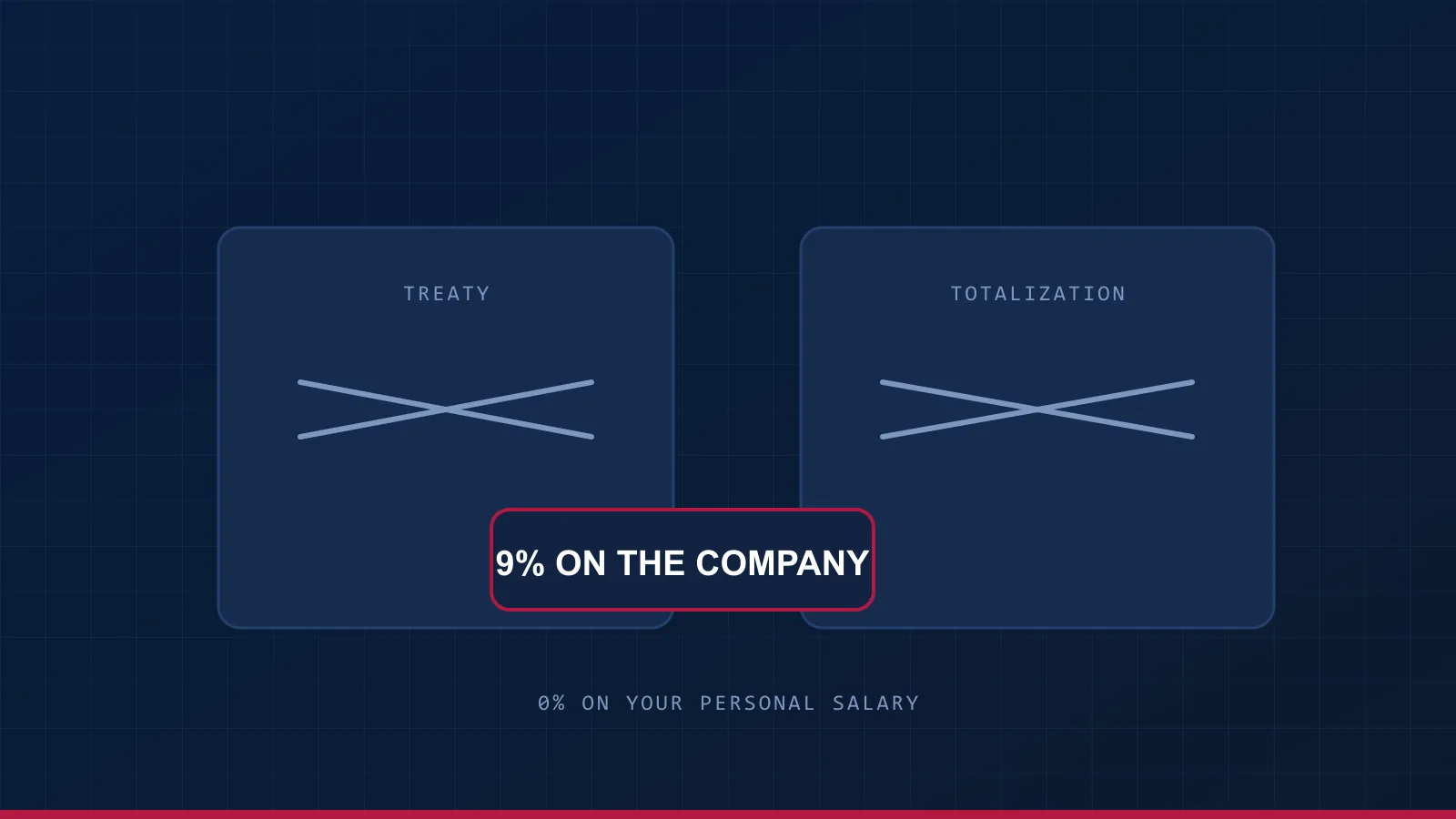

No treaty, no totalization, and nothing to credit
Citizenship, not residence, decides who files a US return, so moving to Dubai or Abu Dhabi does not pause it. There is no US–UAE income tax treaty, and the UAE charges no personal income tax on employment income — so there is no foreign tax credit sitting in reserve the way there is in a treaty country. The Foreign Earned Income Exclusion, $130,000 for tax year 2025, and the foreign housing exclusion are what the return runs on.
There is also no totalization agreement, which settles nothing about US self-employment tax for anyone paid outside standard employer payroll.
The housing exclusion is the largest item on most UAE returns
Dubai and Abu Dhabi rents are among the highest anywhere, which makes the foreign housing exclusion routinely the single biggest line on the return. Qualified housing expenses above a base amount come out of taxable income, subject to a cap that runs higher in UAE cities than in most other locations — computed from the lease or the employer's housing statement, not estimated.
A free-zone company changes the return, not just the salary
The UAE's 9% corporate tax, introduced in 2023, sits on the business, not on personal pay — paying it through a company you own does not create a personal foreign tax credit, which is the assumption I correct most often here. Free-zone company ownership is where UAE returns get genuinely complex: a company you control is likely a controlled foreign corporation for US purposes, bringing Form 5471 and possibly GILTI into the return, with PFIC questions on any funds held inside it.
"Combat zone" does not mean tax-free for civilians
The UAE is still part of the IRS's Arabian Peninsula combat zone designation, in place since Operation Desert Storm, and it hosts a real US military and contractor presence. That leads people to assume the pay itself is untaxed — it is not. The Section 112 combat-zone income exclusion applies to members of the Armed Forces, not to civilian contractors or support staff. Civilians serving in the zone in direct support of the Armed Forces instead get an automatic Section 7508 extension on filing and payment deadlines — useful, but a deadline extension, not an exemption.
A worked example, tax year 2025
An independent marketing consultant in Dubai, single, qualifying under the physical presence test, contracted directly with clients with a housing allowance built into the fee.
Scroll the table sideways
IRC §112, §911, §1401, §1402 and §7508; IRS Publication 54; IRS Publication 3; IRS Notice 2003-21; UAE Federal Decree-Law No. 47 of 2022; UAE Federal Decree-Law No. 33 of 2021; Social Security Administration totalization agreement list; IRS Streamlined Filing Compliance Procedures; Rev. Proc. 2025-32. Checked 21 September 2026.
Questions Americans in the UAE ask
The UAE has no personal income tax. Do I still owe the IRS anything?
Filing is still required either way. With no UAE income tax to credit, the Foreign Earned Income Exclusion — $130,000 for tax year 2025 — and the foreign housing exclusion are what determine whether anything is actually owed.
I own a free-zone company. Does that change my US return?
Substantially. A company you control is likely a controlled foreign corporation, which brings Form 5471 and possibly GILTI into the return, and investments held inside it raise PFIC questions. A single Form 5471 I will do; a group of operating entities needs a firm.
The UAE now has corporate tax. Can I credit it?
Not against your personal US income tax on salary. The 9% corporate tax is a tax on the company, not on you, so it does not travel to your Form 1116 even when you own the company.
I support US forces from a base in the UAE as a civilian contractor. Is my pay exempt because it's a combat zone?
No. The UAE is part of the IRS's Arabian Peninsula combat zone designation, but the Section 112 income exclusion it carries applies to military pay, not to civilian contractors. Serving in the zone in direct support of the Armed Forces gets you an automatic extension on filing and payment deadlines under Section 7508 — not an exemption from the tax itself.
I have not filed for several years while in the UAE. What now?
If the failure was non-willful — which describes most people in this position — the Streamlined Foreign Offshore Procedures waive the failure-to-file, failure-to-pay and FBAR penalties: three years of returns, six years of FBARs, and Form 14653.
Own a free-zone company?
Twenty minutes settles whether it's a controlled foreign corporation, and what that means for the return.